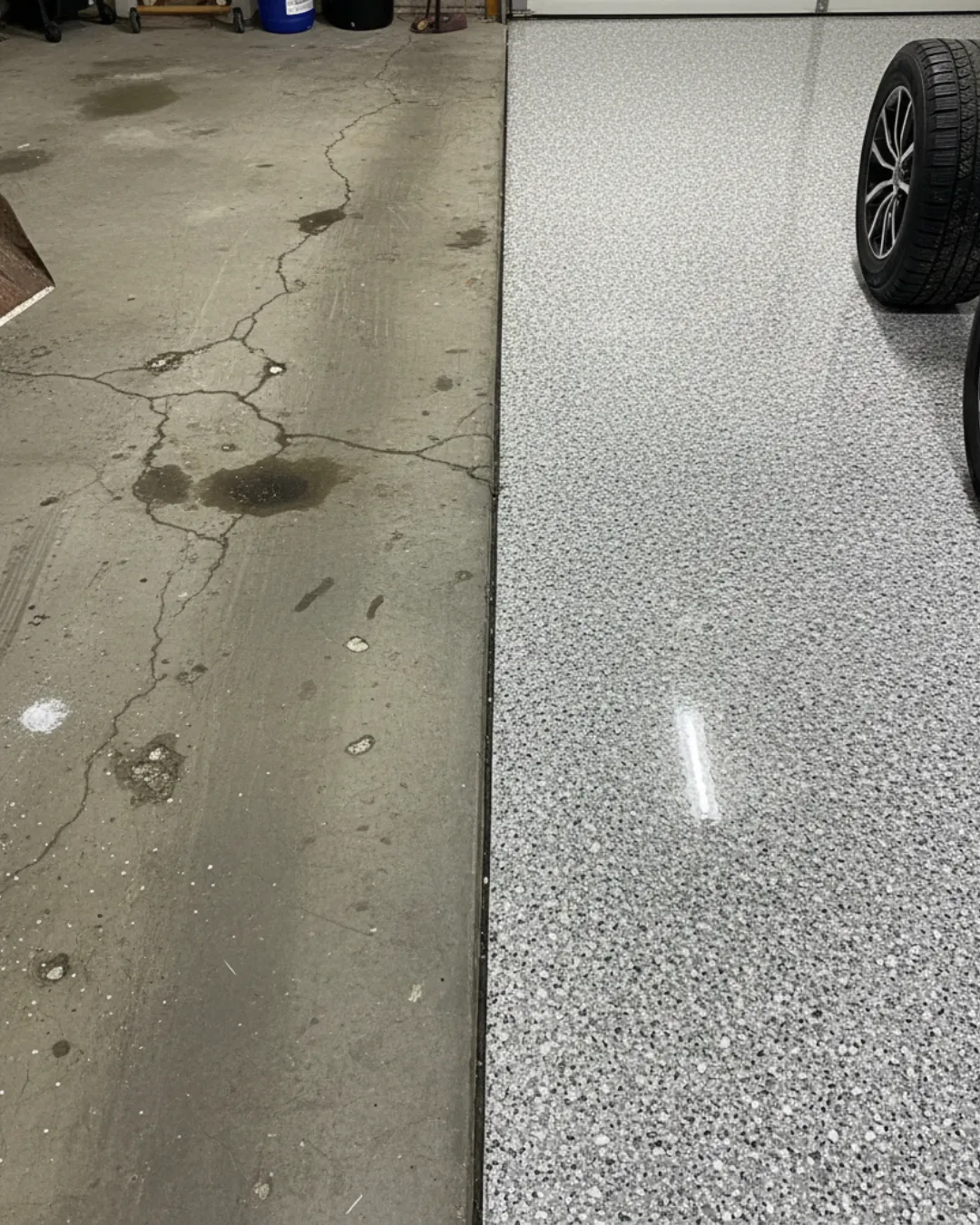
Why Midwest Garages Need Polyaspartic Floor Coatings Today
Why Polyaspartic Floor Coatings Are the Best Choice for Midwest Garages: Benefits, Durability, and Cold‑Weather Solutions
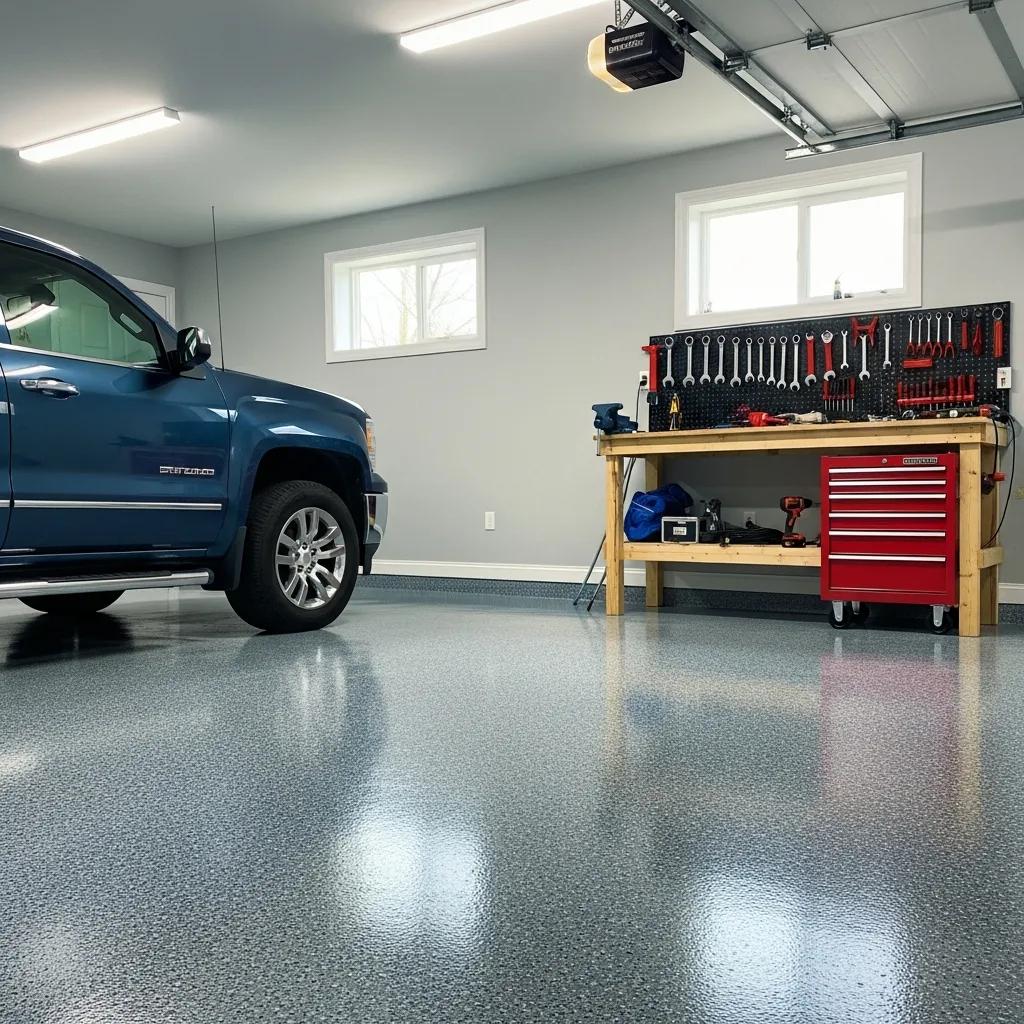
Polyaspartic floor coating is a fast‑curing, high‑performance resin system engineered to shield concrete from abrasion, chemicals, UV damage, and wide temperature swings. For Midwest garages that see freeze‑thaw cycles, regular road salt, and large seasonal temperature ranges, polyaspartic creates a resilient surface that keeps its bond and appearance where many conventional coatings fall short. This page walks through how polyaspartic works, how it compares with epoxy, and what to expect for installation and upkeep in Midwest conditions. It also explains why waterproofing and concrete repair must come first and notes that free pre‑coating inspections are available to spot underlying issues. Read on for a practical overview: core benefits, a side‑by‑side with epoxy, installation steps and maintenance, the role of pre‑coating repairs, Midwest performance considerations, and a simple path to schedule a free inspection and protect your garage floor long term.
What Are the Key Benefits of Polyaspartic Garage FloorCoatings for Midwest Homeowners?
Polyaspartic coatings combine rapid curing, strong abrasion resistance, chemical tolerance, and UV stability — traits that matter in Midwest garages. The chemistry balances molecular flexibility with firm cross‑linking to adhere to well‑prepared concrete, translating to fewer cracks, less delamination, and longer service life through freeze‑thaw cycles. Homeowners also get a quick return to use—often within 24 hours—so projects don’t tie up the garage during short seasonal windows. Below is a concise list of the most important benefits and why they matter here.
Polyaspartic offers direct advantages for garagefloors in colder climates:
Durability and abrasion resistance: Stands up to tires, hand tools, and snow‑removal gear.
Road‑salt and chemical resistance: Creates a barrier against de‑icing salts and automotive fluids.
Fast curing time: Short downtime — you can often use the garage the next day.
UV stability and color retention: Holds color and gloss even where sunlight reaches the floor.
Low VOC formulations: Safer for indoor air during and after installation.
Those advantages explain why many Midwest homeowners choose polyaspartic when they need a balance of longevity and seasonal practicality. Next we compare performance directly with epoxy so you can weigh cost and durability.
How Does Polyaspartic Provide Superior Durability in Harsh Midwest Conditions?
Polyaspartic delivers durability through a molecular structure that blends flexibility with strong cross‑linking. That combination helps the coating absorb and spread stresses from freeze‑thaw movement instead of passing them to the bond line, which reduces reflective cracking and delamination common with more brittle systems. In practice, a properly prepared slab with a polyaspartic system shows less chipping and surface wear across multiple winters. Installer experience and field observations indicate polyaspartic topcoats maintain mechanical integrity longer than many standard epoxies under repeated thermal cycling — a real benefit where slabs contract and expand seasonally.
Research into polyaspartic coatings under combined salt‑fog and freeze‑thaw exposure supports their strong performance in demanding environments.
Durability of Polyaspartic Coatings: Resistance to Freeze‑Thaw Cycles and Salt Fog Exposure This study examined polyaspartic ester (PAE) polyureacoatings on concrete exposed to salt fog and freeze‑thaw cycles. After 200 days of salt‑fog exposure, the relative dynamic elastic modulus showed only minor changes across T3, B2, F2, and TM formulations, though the magnitude varied by formulation. The T3 coating’s modulus began falling after 100 freeze‑thaw cycles and reached its largest change (a 95% decrease) by 200 cycles. By contrast, the TM coated concrete’s modulus remained largely stable through 200 cycles. B2 and F2 fell between T3 and TM. No freeze‑thaw damage was observed in any coated samples after 300 cycles. Studies the Properties of PolyasparticPolyurea Coated Concrete under Coaction of Salt Fog and Freeze‑Thaw, 2012
Why Is UV Stability Important for Maintaining Garage Floor Appearance?
UV stability prevents the yellowing and loss of gloss that can plague many resinous floors exposed to sunlight or strong workshop lighting. Polyaspartic chemistries are formulated to resist photochemical breakdown, so color and sheen last longer than with typical epoxies. For homeowners who value visuals — broadcast flakes, colored coats, or clear topcoats — this stability preserves curb appeal and resale value. Regular cleaning and avoiding prolonged exposure to concentrated heat will also help maintain the finish. UV resistance is a key part of the long‑term maintenance plan discussed in the installation and upkeep section below.
Benefit
Characteristic
Midwest Value
Durability
High abrasion and impact resistance
Stands up to snow shovels, ice scrapers, and heavy use
Road‑salt resistance
Chemical barrier to chlorides
Slows chloride ingress and surface erosion
Fast cure
Rapid cross‑linking chemistry
Shortens downtime during tight seasonal windows
UV stability
Formulated to resist yellowing
Preserves color and gloss despite sunlight
How Does Polyaspartic Compare to Epoxy for Midwest GarageFloors?
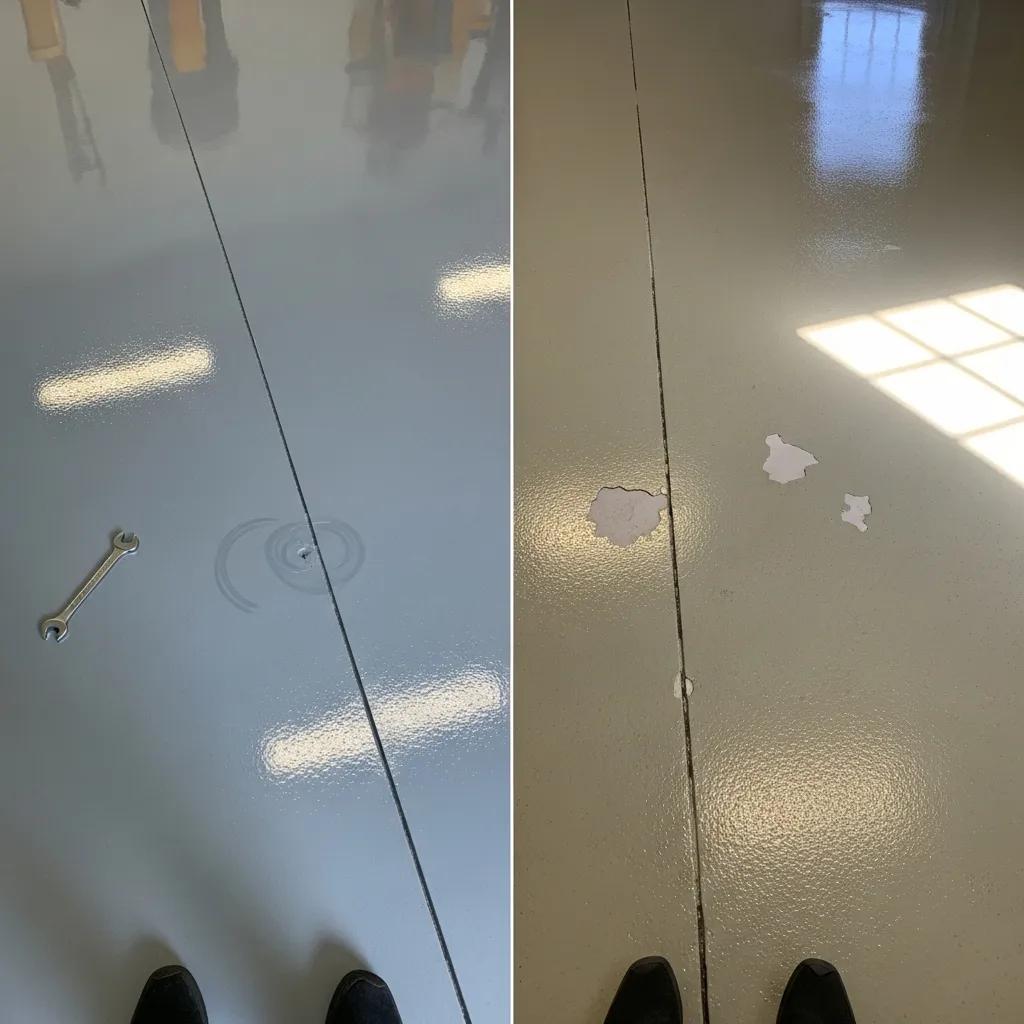
Polyaspartic and epoxy are both resinous floor systems, but they differ in cure chemistry, temperature tolerance, UV performance, and lifetime costs — differences that matter for Midwest garages. Polyaspartic cures faster, tolerates a wider application temperature range, and resists UV better; epoxy usually costs less up front but can yellow and become more brittle under repeated freeze‑thaw stress. Those distinctions affect scheduling, longevity, and maintenance when de‑icing salts and seasonal weather are factors. The table below maps key attributes to Midwest advantages so homeowners can compare cost versus performance.
Coating
Attribute
Midwest Advantage
Polyaspartic
Cure time
Fast cure — often allows return to service within 24 hours in variable temperatures
Epoxy
UV resistance
More likely to yellow in sun‑exposed garages
Polyaspartic
Temperature tolerance
Wider application window, including cooler days
Epoxy
Flexibility
Can be more brittle under repeated freeze‑thaw stress
What Makes Polyaspartic Better Than Epoxy in Cold Weather Applications?
Polyaspartic formulations often react and cross‑link faster and have shorter pot lives, allowing them to develop adequate cure at lower ambient temperatures than many epoxies. That means installers can complete coatings during cool spring or fall days without waiting for summer heat — a major scheduling advantage in the Midwest. Polyaspartic’s flexibility also reduces stress transfer at the coating interface during freeze‑thaw cycling, lowering the chance of cracking and delamination versus more rigid epoxies. Best practices — temperature‑controlled material storage, heated application areas, and strict moisture limits — further support successful cold‑weather installs. Knowing these installer steps helps homeowners set realistic timelines and expectations.
What Are the Cost and Longevity Differences Between Polyaspartic and Epoxy?
Polyaspartic systems typically have higher material and labor costs up front than basic epoxy, but their longer service life, less frequent recoating, and lower maintenance needs can produce a lower total cost of ownership over time. Lifecycle factors include fewer salt‑related repairs, reduced aesthetic touch‑ups, and minimal downtime during cooler seasons thanks to fast cures. Rather than generalizing, homeowners should request a site inspection and a lifecycle comparison quote so costs and savings are calculated for their slab condition and use patterns. The installation and maintenance sections below show how those factors affect both initial price and long‑term performance.
How Is Polyaspartic Floor Coating Installed and Maintained for Midwest Garages?
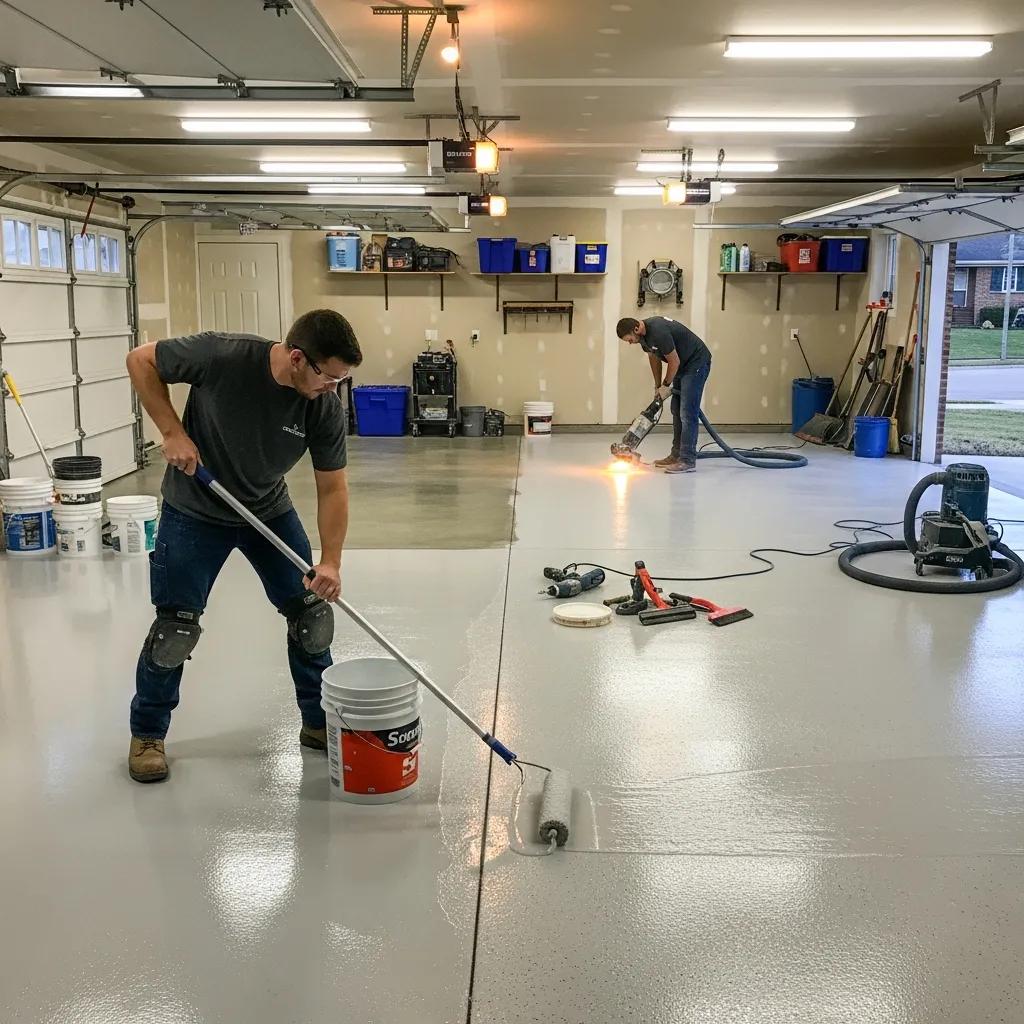
A successful polyaspartic job starts with careful surface preparation, the right primer, and a correct topcoat — all done with attention to moisture and concrete condition. Diamond grinding or mechanical profiling exposes clean aggregate and creates the mechanical profile primers and topcoats need to bond. After profiling, repairs and primers are applied, optional decorative flakes are broadcast into a tacky basecoat, and a clear or pigmented polyaspartic topcoat seals the system. Installers will adapt steps to slab condition and the climate to minimize moisture risk and to optimize cure in cooler weather. Below are the installation stages homeowners should expect.
Installation follows a precise sequence:
Assessment and surface profiling: Inspect, clean, and mechanically prepare the concrete to achieve the correct profile.
Concrete repairs and priming: Fill cracks and apply primer to create a sound base for the coating.
Broadcast and topcoat: Scatter decorative flakes if desired into the wet basecoat; apply the protective topcoat.
Final inspection and cure check: Verify adhesion and finish before allowing normal use.
Those steps ensure the coating bonds properly and performs over time. A typical single‑day or short project timeline often looks like this:
Morning: Surface prep and grinding to achieve the correct profile.
Midday: Crack repairs, patches, and primer application.
Afternoon: Basecoat application, optional flake broadcast, and topcoat.
Evening: Final inspection and initial cure verification.
What Should Homeowners Expect During the Polyaspartic Installation Process?
Expect a noisy but relatively brief prep phase — mechanical grinding and thorough vacuuming — followed by a controlled application sequence that frequently allows vehicle access within 24 hours, depending on product and conditions. Installers will check substrate moisture, repair visible cracks, and apply a primer matched to slab porosity — all important for adhesion and warranty coverage. On install day, keep pets and occupants away from fumes until low‑VOC products have off‑gassed. The payoff is minimal downtime and a durable, attractive finish, which is why polyaspartic is popular where seasonal windows are tight.
How Can You Maintain Your Polyaspartic Garage Floor for Long‑Term Performance?
Maintenance is simple: sweep regularly and mop periodically with a pH‑neutral cleaner to remove grit, salt, and chemical spills that can abrade or stain the surface. Rinse and neutralize road salts and automotive fluids quickly to avoid long‑term chemical attack at edges and joints. Inspect for hairline cracks or any delamination after each winter and schedule repairs promptly — early action prevents larger, costlier restorations. A short seasonal checklist — spring salt rinse, summer inspection, fall joint‑seal touch‑ups — will extend service life and keep the floor looking and performing its best.
Why Are Waterproofing and Concrete Repair Essential Before Polyaspartic Coating?
Applying polyaspartic over a compromised slab risks adhesion failure and premature coating loss. Moisture migration, structural cracks, and spalling must be found and corrected before any resinous system goes down. Waterproofing and concrete repair address those root causes — stopping water ingress and restoring concrete integrity — which improves adhesion and long‑term performance. A free pre‑coating inspection identifies moisture levels, crack patterns, and drainage issues so a targeted repair plan can be proposed. Below is a mapping of common pre‑coating services to the outcomes they deliver and why each matters for a durable finish.
Service
Outcome
Why It Matters
Waterproofing
Reduced moisture transmission
Prevents blisters and adhesion loss under the coating
Crack repair
Restored structural integrity
Limits reflective cracking in the finished surface
Surface leveling
Even substrate profile
Ensures uniform coating thickness and a consistent appearance
Joint sealing
Flexible transitions at control joints
Reduces edge failure and stops water intrusion
Studies show that combined freeze‑thaw stress and salt exposure accelerate deterioration if adhesion and barrier properties aren’t robust — underscoring the importance of proper prep and repairs.
Polyaspartic Ester Coatings: Freeze‑Thaw and Salt Resistance in Concrete This study evaluated coated concrete exposed to both freeze‑thaw cycles and NaCl immersion. The adhesion of concrete coated with QF‑1 (PAE‑b‑H12MDI prepolymer H66) and QF‑2 (PAE‑b‑H12MDI prepolymer H62) dropped by about 5% each but remained excellent after exposures of 200 and 300 days and after 25 and 50 cycles, respectively. The co‑action of freeze‑thaw and salt accelerated degradation: average chloride content rose roughly 33% after 25 cycles and 87% after 50 cycles compared with NaCl immersion alone. The chloride diffusion coefficient of the substrate also increased with exposure. Evaluation of the properties of polyasparticpolyurea coated concrete subjected to the co‑action of freeze‑thaw cycles and NaCl solution immersion, 2011
What Signs Indicate Your Midwest Garage Needs Waterproofing?
Watch for visible clues such as efflorescence (white powder), seasonal dampness, blistering of paint or coatings, and spalling near door thresholds — all signs that moisture is present or freeze‑thaw damage is occurring. Musty smells after snowmelt and staining where de‑icers collect are additional warning signs. If you see any of these, a free inspection can quantify moisture levels and recommend waterproofing or drainage fixes. Early detection lets you target repairs that protect both the slab and any future coating.
How Does Concrete Crack Repair Improve Polyaspartic Coating Longevity?
Correct crack repair — using methods that bond, seal, and block water entry — reduces stress transfer to the coating and lowers the chance of reflective cracking. When cracks are routed and sealed or injected with appropriate materials, the substrate moves more uniformly under thermal and load cycles, preserving the coating bond. Repairing cracks before coating also lets installers feather transitions and match thickness for consistent performance across the slab. A free inspection will show which repair methods are right and help prioritize work that maximizes coating life.
What Midwest‑Specific Challenges Do Polyaspartic Coatings Address?
Midwest garages face repeated freeze‑thaw cycles, heavy de‑icing salt use, large seasonal temperature swings, and abrasion from winter tools and snow‑clearing. Polyaspartic coatings act as a multi‑functional barrier — offering chloride resistance, flexibility to tolerate thermal movement, and abrasion resistance to survive snow‑removal activities. Understanding these regional stressors explains why material choice, surface prep, and maintenance plans must be tailored locally. The list below summarizes the key stressors and how polyaspartic helps.
Freeze‑thaw cycles: Flexibility reduces stress transfer to the coating.
Road salt exposure: Chemical resistance limits chloride penetration.
Temperature swings: Wide application window and stable cure across seasons.
Abrasion from winter tools: High hardness and abrasion resistance protect the surface.
How Do Polyaspartic Coatings Protect Against Freeze‑Thaw Cycles and Road Salt Damage?
Polyaspartic coatings form a continuous, low‑permeability layer that slows chloride ions from reaching reinforcement or aggregate interfaces, helping delay corrosion and surface breakdown. Their flexibility absorbs micro‑movements caused by freeze‑thaw cycles, reducing crack growth and reflective failures. Regular spring cleaning to remove salt residue and periodic inspections of sealants and joints complement the coating’s barrier properties. Together, material choice plus routine maintenance prolong slab health and reduce the need for costly repairs.
Can Polyaspartic Be Applied Effectively in Extreme Midwest Temperatures?
Yes — polyaspartic systems are workable across a broader temperature range than many epoxies. Installer techniques such as heated material storage, temporary heated enclosures, and cold‑tolerant formulations enable winter or shoulder‑season installations. These measures help the resin reach required cure stages without excessive pot‑life loss or trapped moisture. Schedule work with installers experienced in Midwest timing to balance ambient conditions and project plans for reliable results. Understanding these nuances lets you plan projects outside a narrow summer window.
How Can Midwest Homeowners Schedule a Free Inspection for Polyaspartic and Related Services?
Scheduling a free inspection is the first step to matching the right coating, waterproofing, and concrete repairs to slab condition and local climate stressors. A clear inspection pathway reduces risk by identifying moisture, structural concerns, and the most appropriate coating systems before work begins. While this page doesn’t list contact specifics, homeowners should expect a standard process that results in a prioritized repair and coating proposal. The steps below reflect common industry practice so you know what happens after requesting an inspection.
Requesting and completing an inspection typically follows three steps:
Request inspection: You request a no‑cost on‑site assessment to evaluate the garage slab and drainage.
On‑site assessment: A technician performs a visual check, moisture testing, and crack mapping to define scope.
Quote and recommended repairs: You receive a prioritized proposal detailing waterproofing, repairs, and coating options with timelines.
This simple flow shows how an inspection becomes a tailored plan that protects your garage for the long term. The next section explains what the free inspection usually includes so you can prepare and ask the right questions.
What Does a Free Garage Floor Inspection Include?
A thorough free inspection generally includes a visual surface survey, checks for flatness and adhesion, moisture testing with non‑destructive meters, and mapping of visible cracks and spalls to set repair priorities. Inspectors will review drainage patterns and look for signs of salt or water intrusion that could undermine coating adhesion. The outcome is a written recommendation outlining waterproofing, concrete repairs, and a suggested polyaspartic system with a weather‑appropriate installation timeline. That detail helps homeowners understand why certain preparatory steps are necessary before a finish coat is applied.
How Does Scheduling a Free Inspection Lead to Long‑Term Garage Floor Protection?
A proper inspection uncovers root causes — moisture migration, structural deterioration, or drainage failures — that coatings alone cannot fix. A repair‑first approach raises adhesion reliability and lowers lifecycle costs. Prioritizing repairs and waterproofing before coating prevents early failures, supports warranty coverage, and sets predictable maintenance intervals. Follow the inspection → repairs/waterproofing → polyaspartic coating → maintenance sequence and you’ll convert an initial investment into durable, low‑maintenance protection and greater peace of mind.
Inspection identifies causes: Finds moisture, cracks, and drainage issues.
Repairs reduce failure risk: Fixing root problems improves adhesion.
Coating completes protection: Polyaspartic locks in durability and appearance.
Frequently Asked Questions
What is the lifespan of polyaspartic floor coatings compared to epoxy?
Polyaspartic floor coatings generally last longer than typical epoxy systems, often in the 10–20 year range with proper maintenance. That durability comes from better abrasion, chemical, and UV resistance — all important in harsh Midwest conditions. While epoxy can be cheaper up front, its shorter life and higher upkeep can make it more expensive over time. Consider both initial cost and projected lifecycle when choosing a system for your garage.
Can polyaspartic coatings be applied over existing epoxyfloors?
Yes — polyaspartic can be applied over existing epoxy, but surface preparation is critical. The existing epoxy must be sound (no peeling or delamination). The surface needs thorough cleaning and mechanical profiling so the new polyaspartic can adhere properly. Consult a professional installer to assess the existing floor and recommend the best preparation and application plan for a long‑lasting result.
How do temperature fluctuations affect the application of polyaspartic coatings?
Temperature affects pot life and cure speed. Unlike many epoxies, polyaspartic can be applied over a wider temperature range, commonly from about 20°F to 100°F, but very cold conditions slow curing while very hot conditions shorten working time. Experienced installers use heated storage, controlled environments, and appropriate product choices to manage those effects. Scheduling work in moderate weather still helps ensure consistent results.
What maintenance is required for polyaspartic garagefloors?
Maintenance is straightforward: sweep regularly and mop with a pH‑neutral cleaner to remove dirt, salt, and chemicals. Rinse off road salts promptly and inspect the floor after winter for hairline cracks or signs of delamination. Timely repairs and seasonal care — like spring rinses and fall sealant checks — will extend the life of the coating and keep it looking its best.
Are there any environmental benefits to using polyaspartic coatings?
Yes. Many polyaspartic formulations are low in volatile organic compounds (VOCs), which reduces indoor air emissions during and after application. Their durability also means fewer recoats and less material waste over time, which lowers the environmental footprint compared with systems that need frequent replacement. Choosing long‑lasting coatings is a practical way to reduce repeated resource use.
What should homeowners do if they notice moisture issues before coating?
If you spot moisture signs — efflorescence, damp patches, or blistering — address them before coating. Moisture leads to adhesion failures and premature coating loss. Schedule a free inspection to assess moisture levels and identify waterproofing or repair steps. Fixing these problems first creates a stable foundation and improves coating performance and lifespan.
How do polyaspartic coatings handle heavy loads and impacts?
Polyaspartic coatings are formulated to resist heavy loads and impacts, making them well suited for garage use. Their abrasion resistance and flexibility help absorb shocks and distribute stress across the surface, reducing the risk of cracking or delamination under vehicle weight and heavy equipment. With proper installation and maintenance, a polyaspartic floor will keep its integrity and appearance under regular use.
Conclusion
For Midwest garages, polyaspartic floor coatings deliver fast curing, strong durability, and reliable resistance to freeze‑thaw cycles and road salt — making them a smart upgrade over traditional epoxy for many homeowners. They protect appearance, reduce downtime, and lower long‑term maintenance needs when combined with proper waterproofing and concrete repairs. To get the best outcome, schedule a free inspection so a professional can evaluate your slab and recommend tailored repairs and a coating plan. Take that first step toward a resilient, low‑maintenance garage floor today.
**
