Ask These 5 Questions to Your Garage Floor Epoxy Contractors
Jonathan Welter, Flooring & Concrete Preparation Specialist at Midwest Floor Shield
Jonathan Welter is a coatings and concrete preparation expert with more than 15 years of hands-on experience installing high-performance epoxy and polyaspartic flooring systems. As a specialist with Midwest Floor Shield, Jonathan has overseen hundreds of residential and commercial projects across regions like Roscoe, Illinois, and Madison, Wisconsin, focusing on moisture testing, surface preparation, repair workflows, and long-term coating performance.
His technical background includes concrete profiling, crack and spall remediation, vapor mitigation, and system selection for garages, basements, shops, and commercial facilities. Jonathan’s field data and on-site diagnostics give him a deep understanding of why coatings succeed—or fail—based on substrate conditions, prep quality, and product chemistry.
Jonathan is committed to educating homeowners and property managers on how proper testing, preparation, and system design protect their investment and extend the life of their flooring. His goal is to simplify the decision-making process with clear, practical guidance backed by real-world results.
A careful vetting process protects your investment when hiring epoxy floor contractors, preventing common failures like peeling, bubbling, and premature delamination. This article teaches homeowners in areas such as Roscoe, Illinois, and Madison, Wisconsin, the five essential questions to ask prospective epoxy flooring contractors and explains why each question matters for durability, warranty validity, and long-term cost control. You will learn how to verify contractor experience, evaluate surface preparation methods, interpret moisture testing and remediation, check licensing and warranty language, examine portfolios and reviews, and compare epoxy to polyaspartic alternatives. Each section links practical verification steps to observable failure modes and repair costs so you can make an informed hiring decision. By the end, you’ll have checklists, comparison tables, and inspection guidance that help you avoid surprises during installation and beyond.
How Experienced and Specialized Is Your EpoxyFloor Contractor?
Understanding a contractor’s experience and specialization helps predict whether they can handle your specific project scope and avoid installation pitfalls. Experience indicates exposure to diverse substrates and failure modes, and specialization (garage, basement, commercial, decorative) shows whether the contractor uses appropriate materials and application sequences. Ask targeted verification questions to confirm claims and uncover red flags like inconsistent portfolios or extensive subcontracting. Evaluating experience first reduces the risk of common problems and naturally leads into assessing preparation and testing practices that determine long-term performance.
How Long Have You Been Installing EpoxyFlooring?
Ask for concrete indicators of experience rather than vague statements about tenure; request project counts, timelines, and references for similar scope work. Verification steps include asking to see dated project photos with substrate descriptions, requesting references you can contact, and confirming whether installers are in-house or subcontracted. Watch for red flags such as an inability to provide project-specific contacts or portfolios that show repeated fixes on the same site. These verification questions help you connect claimed experience to real outcomes and set expectations for workmanship quality.
What Types of Epoxy Projects Do You Specialize In?
Clarify whether the contractor focuses on residential garages, decorative metallic or flake finishes, commercial high-traffic floors, or industrial specifications that require high chemical resistance. Specialization affects product selection, build thickness, and surface preparation techniques, all of which influence longevity and warranty coverage. Request examples of completed projects that match your intended use and ask about the performance of those coatings over time. Matching project type to contractor specialization increases the likelihood of a successful installation tailored to your performance and aesthetic goals.
What Surface Preparation and Application Methods Do You Use?
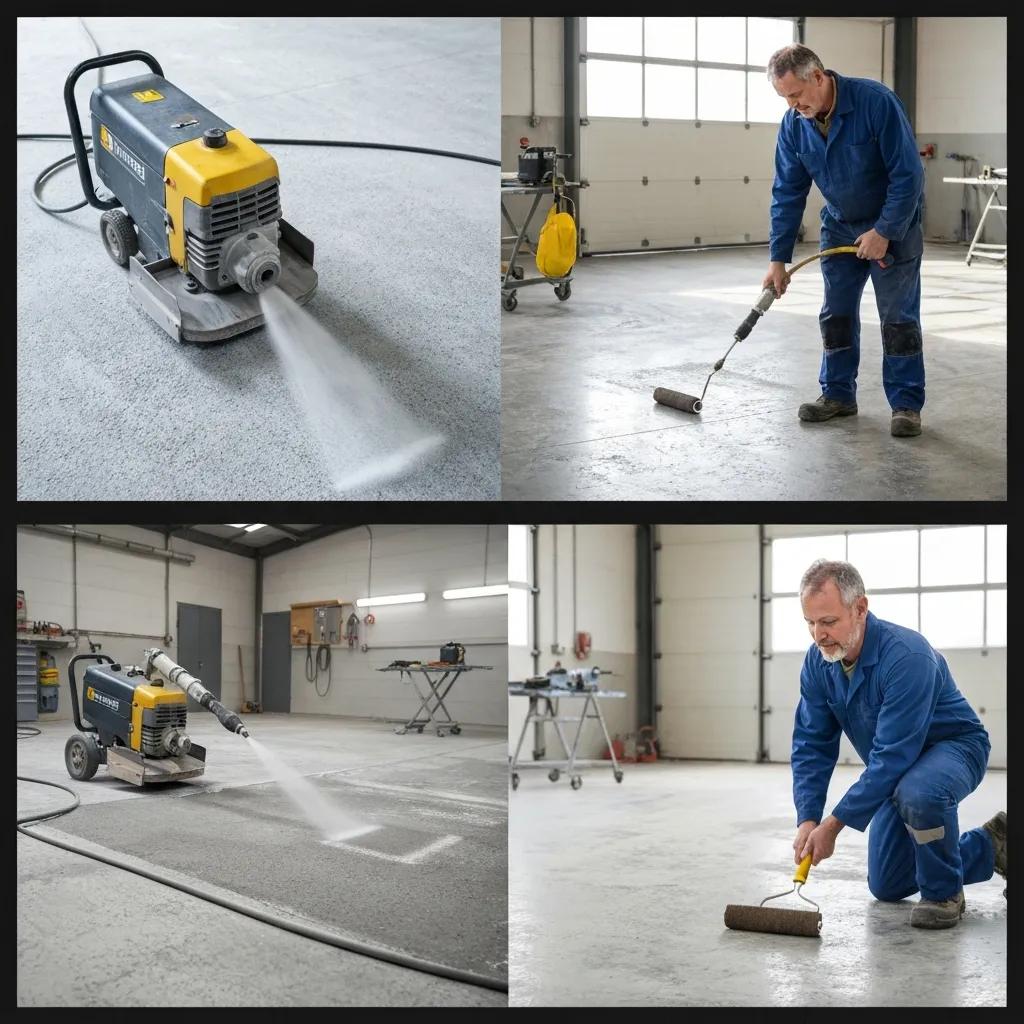
Proper surface preparation is the foundation of a durable epoxyfloor; insufficient prep is the leading cause of coating failure. Techniques like diamond grinding and shot blasting create an appropriate concrete profile and remove contaminants, while inadequate methods such as sole reliance on acid etching often leave bond-inhibiting residues. Professional contractors will describe a step-by-step workflow including contaminant removal, crack repair, profile creation, primer application, build coats, and topcoats, and they will explain how each step prevents specific failure modes. Understanding the prep-to-application sequence prepares you to spot shortcuts and insist on practices that protect your coating investment.
Before presenting the comparison table, here is a concise checklist of accepted and risky preparation methods to help you evaluate contractor proposals.
Diamond grinding creates a clean, profiled surface for strong mechanical bonding and is appropriate for most interior slabs.
Shot blasting removes coatings and creates a robust profile for heavy-duty applications and is suitable for large commercial slabs.
Acid etching is a low-cost method that may leave residues and is not a reliable sole preparation method for long-term epoxy adhesion.
This table compares common preparation approaches, their purpose, and pros/cons to clarify why contractors choose one method over another.
Preparation Method
Purpose
Pros and Cons
Diamond grinding
Create uniform profile and remove laitance
Pros: precise profile, dust control; Cons: equipment cost, time
Shot blasting
Abrade surface and remove old coatings
Pros: aggressive removal, good for large areas; Cons: messier, needs containment
Acid etch
Lightly remove contaminants and roughen surface
Pros: low cost; Cons: variable results, can leave residues causing bond failure
This comparison highlights that diamond grinding and shot blasting provide more reliable mechanical bonding than acid etching, reducing delamination risk and long-term remediation costs.
How Do You Prepare Concrete Surfaces Before Epoxy Installation?
Concrete preparation combines mechanical profiling, repair of defects, and contaminant removal to create a stable substrate for epoxy systems. The contractor should describe grinding or blasting to achieve a specified surface profile, explain how they repair cracks or spalls (injection, patching, or leveling), and outline cleaning methods for oil, grease, or curing compounds. Good contractors also ventilate and control dust during prep to protect indoor air quality and ensure primer adhesion. Knowing these steps helps you detect shortcuts and ensures the substrate will support the intended coating system long term.
Do You Test for Moisture and How Does It Affect Installation?
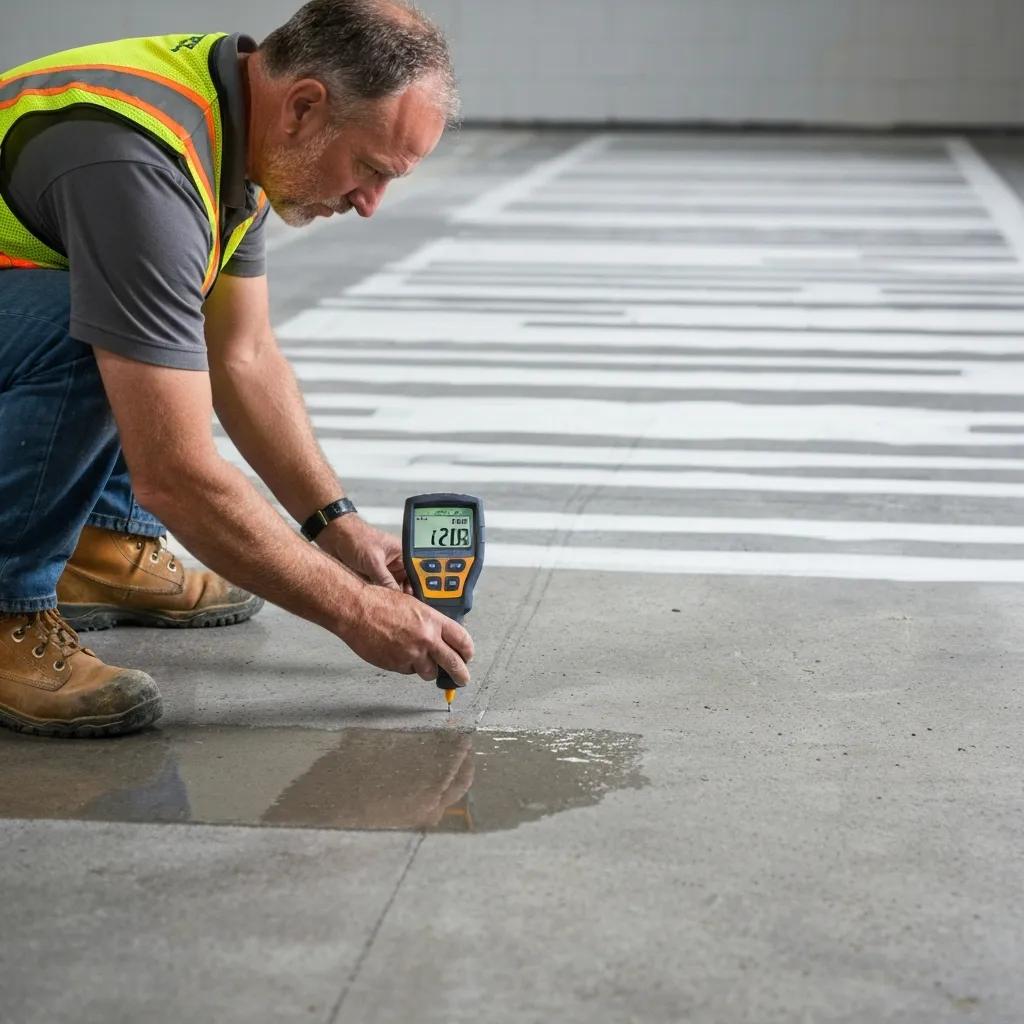
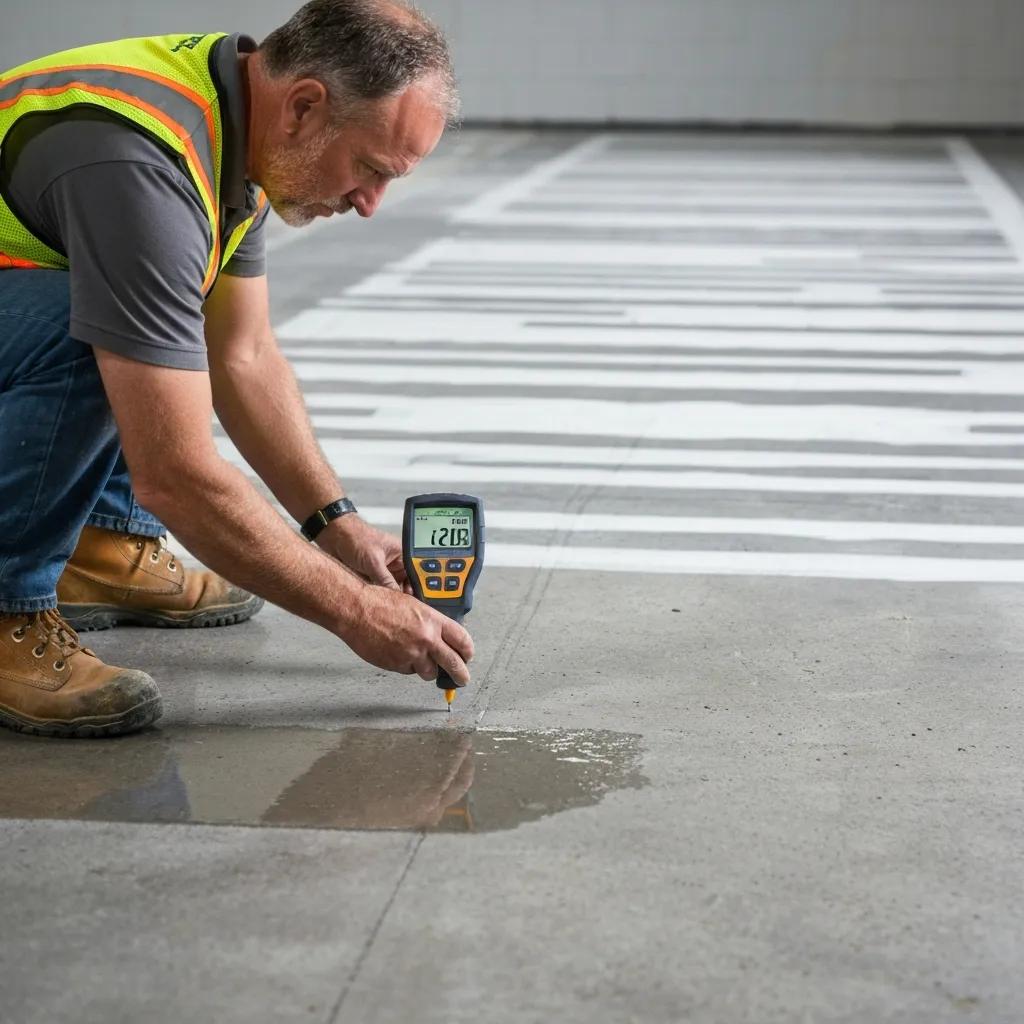
Moisture testing is essential because elevated slab moisture causes blistering, bubbling, and coating disbondment when epoxy is applied over a wet substrate. Reliable tests include in-situ relative humidity probes and calcium chloride tests; surface moisture meters are useful screening tools but not definitive. Contractors should quote acceptable thresholds and explain remediation options such as moisture mitigation coatings, slab drying, or installing vapor barriers when thresholds are exceeded. Confirming that contractors will test and act on results prevents warranty voids and expensive repairs caused by installing coatings over unsuitable concrete.
Moisture Testing and Inspection of Concrete Floors for Coating Application ABSTRACT: Article Navigation TECHNICAL PAPER Moisture Testing and Inspection of Concrete Floors for Coating Application Available for Purchase Brian O’Farrell Brian O’Farrell DP Coatings Ltd., Brantford, Ontario, Canada Brian O’Farrell, PCS DP Coatings Ltd. Brian began his career in the coatings industry as an industrial painter in 1991. In 1997, he founded Dynamic Painting and Coatings Ltd., which performed a wide range of commercial and industrial work, specializing in concretefloorcoating systems. In 2012, he established DP Coatings Ltd. (Inspection Services) and commenced work as a coatings inspector. Brian is actively involved in both SSPC and NACE. He currently serves as the chair of the Toronto section of NACE and participates on committees C7.5 Texture of Concrete Coatings, C8.3 CommercialFlooring, and C8.5 Commercial Contractor Certification. Brian holds multiple certifications, including NACE Level 3, SSPC PCI Level 3, SSPC CCI, SSPC PCS, SSPC CAS (Full Status), and SSPC MCI. He possesses MCU industrial and commercial certificates for... Moisture Testing and Inspecting for Concrete Floors to Receive Coatings, 2016
Are You Licensed, Insured, and What Warranty Do You Offer?
Licensing, insurance, and warranty protections are critical commercial controls that transfer risk away from homeowners and establish accountability. Request specific documents such as a license number you can verify, an insurance certificate naming coverage types and limits, and written warranty terms that delineate material, labor, and workmanship coverage. Understanding warranty exclusions—commonly moisture-related failures and improper maintenance—helps align pre-installation testing and repairs with warranty conditions. Verifying these protections before signing a contract reduces exposure to remediation costs and clarifies how the contractor responds if issues arise.
Here are practical verification steps to confirm commercial protections before hiring.
Request Licensing Details: Ask for a verifiable license number and the issuing authority so you can confirm legitimacy through the appropriate board.
Obtain Insurance Certificates: Request an insurance certificate showing general liability and workers’ compensation with policy effective dates and coverage limits.
Ask for Written Warranty Language: Request a sample written warranty that specifies what is covered, duration, and exclusions so you can compare offers fairly.
These checks let you compare contractors on objective commercial protections rather than sales rhetoric, and they lead naturally into reviewing warranty scope and claim procedures.
Can You Provide Proof of Licensing and Insurance Coverage?
When contractors provide licensing and insurance documents, verify them by checking the issuing authority and asking for the insurer’s name and policy effective dates. Confirm that liability limits are adequate for renovation work and that workers’ compensation is provided to avoid homeowner exposure. Ask how often coverage is updated and whether the contractor will list you as an additional insured during the project if required. These verification steps ensure that a subcontractor’s accident or a property claim does not become your financial responsibility.
What Does Your EpoxyFlooringWarranty Cover and How Long Does It Last?
Warranty language varies; key distinctions include material-only warranties versus combined material-and-workmanship guarantees and what triggers exclusions such as moisture or structural movement. Reasonable warranties align with the system specified—light-use residential coatings commonly carry shorter coverage than commercial-grade systems designed for heavy loads. Ask for examples of warranty claim processes and expected response times for remediation to ensure the contractor follows documented service procedures. Understanding warranty scope helps you plan necessary pre-installation steps like moisture mitigation to keep coverage valid.
Can You Provide References, Reviews, and Examples of Past Work?
A contractor’s portfolio and reference feedback reveal real-world performance, attention to detail, and how post-installation issues are handled. Request project photos with context—substrate type, prep notes, and client results—and follow up with references for candid feedback about timeline, cleanup, and durability. Evaluate online reviews critically by looking for consistent patterns rather than isolated praise or complaints. This reputational assessment helps you predict whether a contractor’s workmanship and communication align with your expectations and the specifications you require for a successful coating.
Where Can I See Your Portfolio of Completed EpoxyFlooring Projects?
Ask for before-and-after photos that include the substrate condition, a brief description of prep performed, and the coating system applied so you can assess match to your project. Request projects that closely resemble your scope—garage, basement, or commercial—and ask for client contacts where possible. Evaluate photos for signs of poor prep such as visible cracks or uneven broadcast; good portfolios include close-ups and wide-angle shots showing edges, transitions, and finish quality. A transparent portfolio demonstrates the contractor’s ability to deliver the specific result you want.
How Do You Handle Customer Feedback and Complaints?
Contractors should describe a documented process for handling post-installation issues including response timelines, troubleshooting steps, and escalation paths for warranty claims. Ask what typical remediation steps are and how quickly service calls are handled, especially for coatings under warranty. Look for contractors who provide written service agreements or satisfaction guarantees and who can cite example resolutions without inventing names or unverifiable claims. Understanding this process offers reassurance that the contractor stands behind their work and has a practical method to correct defects.
What Types of Epoxy and Alternative Coatings Do You Offer?
Choosing the right coating chemistry and finish depends on use-case factors like traffic, chemical exposure, UV exposure, cure time, and aesthetic goals. Solid-color epoxy, flake broadcast systems, and metallic epoxy finishes each serve different needs in appearance and durability. Polyaspartic coatings offer faster cure times and better UV stability than some epoxies, making them suitable for certain environments, while polyurethane topcoats add abrasion and UV resistance where needed. Knowing the functional tradeoffs helps you select the optimal system and set realistic expectations for maintenance and longevity.
Coating Type
Cure Time
UV Resistance
Ideal Use-Case
Typical Thickness
Epoxy (solid/flake)
24–72 hours to handle
Moderate (can yellow without topcoat)
Garages, basements, decorative interiors
8–20 mils per coat
Polyaspartic
1–4 hours to handle
High (UV stable)
Fast-turnaround projects, exterior areas
6–15 mils
Polyurethane (topcoat)
6–24 hours
Very high
UV protection and abrasion resistance over epoxy
2–8 mils (as topcoat)
This table clarifies that polyaspartic options are attractive for quick-turn projects and outdoor or UV-exposed installations, while epoxy systems remain versatile for garage and indoor decorative uses when paired with appropriate topcoats.
What Epoxy Products and Thickness Levels Do You Use?
Product specs and applied thicknesses determine abrasion resistance, chemical tolerance, and life expectancy; thicker build systems with broadcast aggregate resist impact and abrasion better than thin film coatings. Ask contractors which product families they specify and the recommended mil thickness for your use-case—garages typically require heavier builds and may include decorative flakes for slip resistance. Verify that the contractor will document product data sheets and as-applied thickness measurements to support future warranty claims. Ensuring the specified system aligns with intended use reduces the likelihood of premature wear and costly recoats.
Do You Offer Polyaspartic Coatings as an Alternative to Epoxy?
Polyaspartic coatings cure faster and exhibit superior UV stability compared with many epoxy formulations, making them suitable for certain environments, while polyurethane topcoats add abrasion and UV resistance where needed. Knowing the functional tradeoffs helps you select the optimal system and set realistic expectations for maintenance and longevity.
How Do You Address Underlying Issues Like Moisture and Concrete Damage?
Identifying and remediating substrate problems before coating is essential because moisture, cracks, and structural defects directly cause coating failure and warranty denials. A thorough approach includes diagnostic testing, prioritized repairs for structural and surface defects, and selection of a coating system compatible with residual moisture conditions if complete mitigation isn’t feasible. Contractors should explain typical remediation workflows—repair, mitigation, retest—and how those outcomes affect project timelines and cost estimates. Recognizing these steps links technical diagnostics to practical decisions about whether to proceed with coating or prioritize repair and waterproofing first.
Do You Provide Free Inspections for Waterproofing and Concrete Repair?
A professional contractor offering integrated services will inspect the slab, run moisture tests, and recommend targeted repairs to ensure coating longevity. Provide useful information, build trust, and lead homeowners to schedule free inspections for waterproofing and concrete repair services. During the inspection, expect visual substrate assessment, moisture testing, crack and spall evaluation, and a written list of prioritized repairs with estimated timelines. These inspection findings determine whether moisture mitigation, slab repair, or drainage improvements are necessary before coating and directly influence warranty eligibility and long-term performance.
Inspection Type
Scope
Issues Identified
Visual & Tap Testing
Surface defects, coatings, visible cracks
Spalls, surface contamination, visible delamination
Moisture Testing (RH / calcium chloride)
In-situ slab moisture conditions
Elevated vapor drive, potential for blistering
Structural Assessment
Crack mapping, slab movement
Structural cracks, settlement, joint issues
This table demonstrates how different inspection techniques uncover distinct problems that influence repair strategy and coating selection.
How Do You Ensure Long-Term Durability Through Repair and Moisture Control?
Long-term durability follows a stepwise plan: identify defects with appropriate tests, remediate structural and surface issues with proven repair materials, mitigate moisture sources, and select a compatible coating system with documented performance. Practical measures include crack injection, epoxy or polymer patching, concrete leveling, exterior drainage improvement, and installing vapor mitigation systems where required. Contractors should also provide maintenance guidelines aligned with warranty requirements, such as recommended cleaners and recoat intervals. Following a documented repair-and-mitigation workflow reduces failure risk and preserves the service life of your epoxy or alternative coating.
Provide useful information, build trust, and lead homeowners to schedule free inspections for waterproofing and concrete repair services.
If you want a floor that looks incredible and performs for years, start with the right prep. Book your free Midwest Floor Shield assessment today in Roscoe, Illinois, Madison, Wisconsin, or surrounding areas and get expert recommendations tailored to your home or business.
